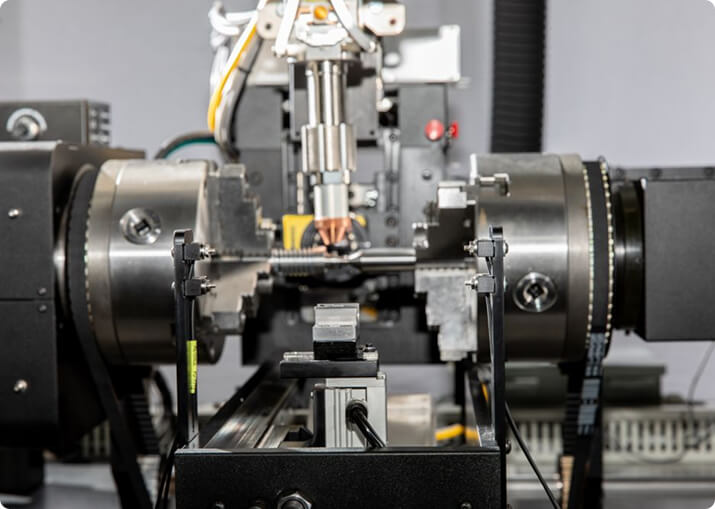

Electric Vehicle
BTI engineers and manufactures a complete line of manual, semi-automatic, and fully automatic precision measurement and testing equipment for all eDrive
View More
Most of what BTI builds is not a catalog machine. If your part is not on one of the application pages, that is normal — a large share of the equipment leaving Whitmore Lake was engineered for a component that had never been through a balancing machine before.
What follows is the set of questions that actually determine what equipment a part needs. They are the same questions our engineers ask on a first call, and working through them before you call will make that conversation considerably shorter.
These two numbers set the permissible unbalance before anything else is discussed. Permissible unbalance scales with rotor mass and inversely with service speed, so a light rotor turning fast can carry a tighter requirement than something ten times heavier turning slowly.
Use the speed the part actually runs at in service, not the speed of the machine it is fitted to. A camshaft at half engine speed and a damper at full engine speed do not share a tolerance. You can work the arithmetic yourself with our free ISO 21940-11 balance tolerance calculator.
A rigid rotor keeps the same mass distribution at every speed, so two correction planes describe it fully and a low-speed balance is valid at operating speed. A rotor that bends does not, and the bow itself creates unbalance that only appears as speed rises.
Long, slender, fast components — driveshafts, turbine rotors, slender tooling — frequently fall on the flexible side. That answer changes the method completely, from conventional two-plane work to multi-plane or at-speed balancing, so it is worth settling early rather than discovering it late.
Disc-shaped parts — large in diameter, short along the axis — can usually be corrected in one plane. Anything with appreciable axial length can develop a couple that single-plane correction cannot remove, and the couple’s effect grows with speed. Where a part sits near the boundary, two planes is the safe answer.
This is the constraint that most often decides the machine, and it is the one people bring to the conversation last. Working surfaces, sealing surfaces, locating features and aerodynamic profiles are normally untouchable. Thin walls, castings, pressure vessels and magnet pockets each rule out particular methods.
If material cannot be removed, correction has to add mass — welded weights, clips, adhesive, or weights into designed pockets — and that brings its own questions about resolution, placement accuracy and retention in service. Parts designed with correction features from the outset are far cheaper to balance than parts that were not.
Very few production lines measure unbalance alone. Runout, dimensional features, crack detection, leak testing, surface finish, resonant frequency and functional performance frequently sit on the same station or the same cell, and combining them usually costs less than separate operations.
It is also common to find that unbalance is not the characteristic actually causing the complaint. Brake judder is usually thickness variation. Driveline noise is usually gear mesh. Knowing which variable you are chasing before buying equipment to chase it is worth the time.
Production rate decides configuration far more than part type does. The same component might justify:
Layouts vary to accommodate any production rate.
You have most of what a quotation needs. What helps beyond that is a drawing, the tolerance you have been given or think you need, and a description of the failure you are trying to prevent — the last one most of all, because it occasionally turns out that balancing is not the right answer.
BTI has designed and built balancing, gauging, crack detection and test equipment since 1968, for components across automotive, aerospace, defense, energy, medical, appliance and general manufacturing. For platform selection across the full range, see BTI balancing machines, or talk to an engineer.
What if my part is not listed in your applications?
It is still worth a conversation. The applications shown are the ones that come up most often, not the limit of what can be balanced. If a part rotates, it can usually be measured, and the question is whether a balancing solution is practical and economic for your volume and tolerance.
How do you decide whether a part can be balanced?
By looking at how it can be supported, how it can be driven, what axis it should be measured about, and where material can be added or removed. A part that has no repeatable locating surfaces, or nowhere to correct, is the hard case. Most parts have both, once the fixture is designed for it.
Can you balance very large or very small parts?
The range is wide in both directions, from disc drive components weighing grams to industrial rotors weighing several tons. The part’s size determines the machine’s capacity, bearing design and drive method rather than whether the job is possible.
What do you need from me to assess a new application?
Part drawings with the datums and tolerances, the required throughput, the balance specification if one exists, and ideally a sample part. What you have already tried and why it did not work is often the most useful thing in the package.
Do you build application-specific machines for unusual parts?
Yes. Many of our specialty machines are single units. Volume is not the qualifier; whether the measurement is achievable and the requirement is clear enough to build to is.
BTI engineers and manufactures a complete line of manual, semi-automatic, and fully automatic precision measurement and testing equipment for all eDrive
View More
BTI engineers and manufactures a complete line of manual, semi-automatic, and fully automatic precision measurement and testing equipment for all turbo charger components and complete assemblies
View More
BTI engineers and manufactures a complete line of manual, semi-automatic, and fully automatic precision measurement and testing equipment for turbines, jet engines, blades, propellers, steam turbines, and other related assemblies and components weighing fractions of an ounce to 200,000 pounds
View More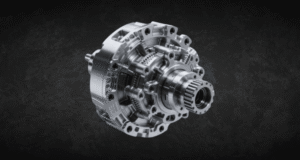
BTI engineers and manufactures a complete line of manual, semi-automatic, and fully automatic precision measurement and testing equipment for all types of transmission components
View More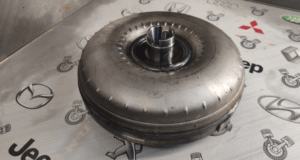
BTI engineers and manufactures a complete line of manual, semi-automatic, and fully automatic precision measurement and testing equipment for torque converters, turbines, dampers, stators, and all related assemblies and components
View More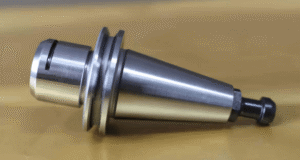
BTI engineers and manufactures both traditional spindled tool holder balancers and a patented (US Patent Numbers 5,763,777 and 5,965,815), first-of-its-kind, spindle-less balancer
View More
BTI engineers and manufactures a complete line of manual, semi-automatic, and fully automatic precision measurement and testing equipment for tire and tire/wheel assemblies for all wheel room applications
View More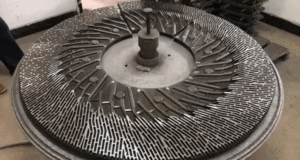
BTI engineers and manufactures a complete line of manual, semi-automatic, and fully automatic precision measurement and testing equipment for refiner plates
View More
BTI engineers and manufactures a complete line of manual, semi-automatic, and fully automatic precision measurement and testing equipment for pumps, fans, impellers, blowers, and related components
View More
BTI engineers and manufactures a complete line of manual, semi-automatic, and fully automatic precision measurement and testing equipment for all HVAC assemblies and related components
View More
BTI engineers and manufactures a complete line of manual, semi-automatic, and fully automatic precision measurement and testing equipment for hard drives, head readers, and related components
View More
BTI engineers and manufactures a complete line of manual, semi-automatic, and fully automatic precision measurement and testing equipment for all flywheels, flex plates, and related assemblies and components
View More
To contact us regarding your project - or if you have any questions - please click the button below :
Request a QuoteGet Started
Connect with our measurement experts and get the technical guidance your application demands.