Turbo Chargers, Super Chargers & Components
BTI engineers and manufactures a complete line of manual, semi-automatic, and fully automatic precision measurement and testing equipment for all turbo charger components and complete assemblies
View More
Electrification changed the balancing problem in one specific way that matters more than all the others: it removed the noise that used to hide everything. An internal combustion engine generates a broad, loud, irregular signature that masks a great deal of driveline vibration. Take it away and an unbalance that was inaudible for decades becomes a customer complaint.
Balance Technology Inc. builds balancing, gauging and test equipment for electric vehicle driveline components — traction motor rotors, e-axle and reduction drive assemblies, and the shafts, gears and housings around them.
Traction rotors typically run considerably faster than an engine crankshaft, and permissible unbalance scales inversely with speed. Combine a higher service speed with a finer balance quality grade — justified by NVH expectations rather than by durability alone — and the permissible residual becomes very small.
The practical effect is that tooling and drive contributions that were comfortably below tolerance on an engine part are now a meaningful fraction of the budget on an EV part. Measurement system capability stops being a formality.
A permanent-magnet traction rotor carries magnets in pockets or on the surface, a retaining sleeve or can, a laminated stack, end plates and a shaft. Its unbalance comes from magnet mass variation, magnet position, sleeve fit and stack variation — assembly characteristics, not machining characteristics.
Correction options are correspondingly narrow. Drilling near magnets risks demagnetization from heat and risks the retention system, so correction normally happens at designed balance features at the rotor ends. That has to be designed in; it cannot be added at the balancing machine.
Rotors that run above a bending critical speed need treating as flexible rotors, which means multi-plane or at-speed work rather than conventional two-plane balancing. Whether a given rotor qualifies is a rotordynamic calculation, not an assumption.
An e-axle combines a high-speed rotor with a reduction gearset in one housing. Gear mesh produces tonal orders that sit in exactly the frequency range human hearing finds objectionable, and unlike broadband engine noise, a tone is noticed at low amplitude.
That makes order analysis, not overall vibration level, the meaningful measurement on an assembled unit. A unit can pass an overall vibration limit and still be rejected for a whine at a specific order. Testing the assembly therefore needs speed-swept, order-resolved measurement rather than a single-number acceptance.
Most EV driveline NVH complaints are not unbalance. They are gear quality, bearing preload, housing resonance, mounting stiffness or electromagnetic order content from the motor itself. Balancing a rotor to a fine grade will not fix a gear whine, and a production strategy that treats balance as the whole NVH answer will chase the wrong variable.
The useful position is that balance is the one contributor that can be measured and corrected on the component, cheaply, before value is added — so it is worth controlling tightly precisely because the others are expensive to fix later.
EV rotor and driveline tolerances follow ISO 21940-11 from a balance quality grade, rotor mass and service speed. BTI publishes a free ISO 21940-11 balance tolerance calculator together with the method — grade selection, the permissible unbalance formula, plane allocation, and a worked example.
EV driveline lines commonly combine balancing with:
Where rotors have to demonstrate integrity at overspeed, that work moves to a containment-rated spin test system.
Layouts range from single manual stations for development and validation work through to fully automatic cells with correction, test and data collection across the line, and vary to accommodate any production rate. For platform selection across the full range, see BTI balancing machines.
Related applications include armatures, rotors and motor assemblies, axles and RDU components and transmission components.
How are electric vehicle motor rotors balanced?
On their bearing journals, in two planes, at or near the speeds they will actually see — which for an EV traction motor commonly means 15,000 RPM or higher. Correction is constrained by the magnet retention design, so it is usually limited to defined areas on the end faces or a dedicated balance ring rather than free material removal.
Why are EV balance tolerances tighter than engine component tolerances?
Because there is no engine noise to mask anything. In a combustion vehicle, combustion and exhaust noise cover a wide band of mechanical vibration. Remove that and the driver hears the driveline directly, so unbalance that was inaudible in a conventional car becomes a warranty complaint in an electric one. The physics did not change; the expectation did.
Are EV rotors balanced as components or as assemblies?
Both, and the assembly step matters more than it does on a machined rotor. An EV rotor is a stack — laminations, magnets, retaining sleeve, shaft, end plates — and each interface contributes unbalance from stack-up and fit. Balancing the components does not predict the assembly’s behavior.
Does the gearbox affect EV NVH testing?
Substantially. The reduction gearset runs at motor speed on its input side and produces gear mesh orders that fall in the range the driver can hear. Testing the motor alone misses that entirely, which is why EV drive units are normally tested as complete assemblies across the full speed range.
Is balancing enough to solve EV drive unit noise?
No. Balancing removes the once-per-revolution excitation. It does nothing about gear mesh, magnetic order noise from the motor’s pole and slot combination, bearing tones, or resonances in the housing. A drive unit can be perfectly balanced and still be rejected on noise, which is why balance and NVH testing usually happen in the same cell.
What speed should an EV rotor be balanced at?
Ideally within its service range, because rotor response changes with speed and EV motors operate far above the speed at which conventional balancing is done. Where the service range crosses a critical speed, the rotor must be treated as flexible rather than rigid, which changes both the measurement and the correction strategy.
Additionally, BTI’s unique ability to combine the aforementioned technologies into one fully integrated system enables our clients to reduce capital expenditures, increase product quality, and minimize floor space requirements.
Let our staff Let our staff of more than 50 engineers design a configured-to-order solution for your specific requirements. Furthermore, our commercial Measurement & Testing Services Group (M&T Services) can assist with everything from prototype testing and R&D work to master certification and running small-to-medium production runs.
If you don’t see the product you are looking for, or have specific questions, please contact us.
BTI engineers and manufactures a complete line of manual, semi-automatic, and fully automatic precision measurement and testing equipment for all turbo charger components and complete assemblies
View More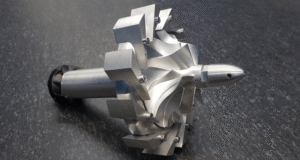
BTI engineers and manufactures a complete line of manual, semi-automatic, and fully automatic precision measurement and testing equipment for turbines, jet engines, blades, propellers, steam turbines, and other related assemblies and components weighing fractions of an ounce to 200,000 pounds
View More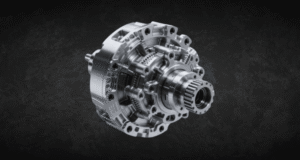
BTI engineers and manufactures a complete line of manual, semi-automatic, and fully automatic precision measurement and testing equipment for all types of transmission components
View More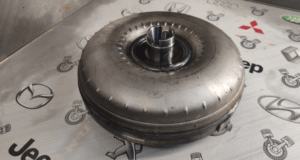
BTI engineers and manufactures a complete line of manual, semi-automatic, and fully automatic precision measurement and testing equipment for torque converters, turbines, dampers, stators, and all related assemblies and components
View More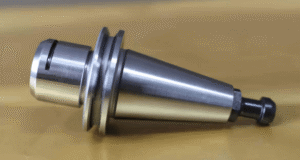
BTI engineers and manufactures both traditional spindled tool holder balancers and a patented (US Patent Numbers 5,763,777 and 5,965,815), first-of-its-kind, spindle-less balancer
View More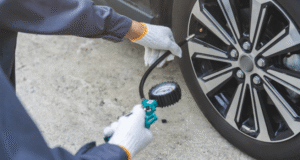
BTI engineers and manufactures a complete line of manual, semi-automatic, and fully automatic precision measurement and testing equipment for tire and tire/wheel assemblies for all wheel room applications
View More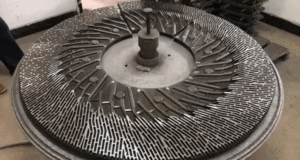
BTI engineers and manufactures a complete line of manual, semi-automatic, and fully automatic precision measurement and testing equipment for refiner plates
View More
BTI engineers and manufactures a complete line of manual, semi-automatic, and fully automatic precision measurement and testing equipment for pumps, fans, impellers, blowers, and related components
View More
BTI engineers and manufactures a complete line of manual, semi-automatic, and fully automatic precision measurement and testing equipment for all HVAC assemblies and related components
View More
BTI engineers and manufactures a complete line of manual, semi-automatic, and fully automatic precision measurement and testing equipment for hard drives, head readers, and related components
View More
BTI engineers and manufactures a complete line of manual, semi-automatic, and fully automatic precision measurement and testing equipment for all flywheels, flex plates, and related assemblies and components
View More
BTI engineers and manufactures a complete line of manual, semi-automatic, and fully automatic precision measurement and testing equipment for flanges, yokes, and related assemblies and components
View More
To contact us regarding your project - or if you have any questions - please click the button below :
Request a QuoteGet Started
Connect with our measurement experts and get the technical guidance your application demands.