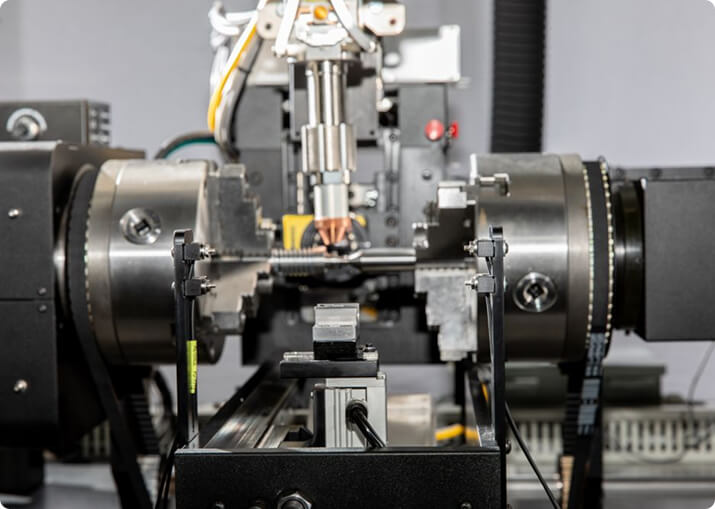

Electric Vehicle
BTI engineers and manufactures a complete line of manual, semi-automatic, and fully automatic precision measurement and testing equipment for all eDrive
View More
HVAC rotors are balanced for a reason most industrial rotors are not: noise. A blower wheel that is slightly out of balance will run for years without failing. It will also be audible in a bedroom, and on residential and light commercial equipment that is the specification that actually governs.
Balance Technology Inc. builds balancing and measurement equipment for blower wheels, axial and condenser fans, fan-and-motor assemblies and related HVAC rotating components.
Because the driver is sound rather than bearing life, the balance quality grade is often finer than a durability argument alone would justify, and the acceptance criterion may be tied to a sound measurement as much as to a residual unbalance figure.
It also means the failure is subjective and delayed. A wheel that passes on the line but produces an audible tone in an installed unit generates a complaint months later, in someone’s house, at a cost far above the value of the part.
Blower wheels and fan blades are light — stamped sheet metal, formed aluminum or molded plastic. Because permissible unbalance scales with rotor mass, a light rotor gets a small permissible residual in absolute terms, and the unbalance of the mandrel or arbor holding it becomes a large fraction of that budget.
This is the application where fixture quality most often limits what a machine can achieve. A worn or bent mandrel gives a stable, repeatable, wrong answer, and an index test is the way to prove it: measure as mounted, rotate the wheel 180 degrees relative to the tooling, re-clamp and measure again. Half the vector difference is the part; half the vector sum is the tooling.
Forward-curved blower wheels are fabricated assemblies — many small blades joined to rings or a backplate — and their unbalance comes from blade placement variation and from distortion introduced when the assembly is joined. Distortion can continue to relax after the joining operation, so a wheel balanced immediately afterward may not stay balanced.
Molded plastic fans carry unbalance from wall thickness variation, gate position, shrinkage and warp, and plastic parts also move with temperature and humidity in a way metal does not.
There is rarely material to spare on a sheet metal or molded rotor, so correction is normally by adding mass — spring clips onto a blade or ring, or adhesive weights. Both bring their own constraints.
Retention is the first. A clip or weight that departs in service leaves the customer worse off than before the wheel was balanced, and it can damage the housing. Clip position repeatability is the second, since a weight at the wrong angle corrects the wrong thing. Where a hub or backplate does offer material, removal by drilling or milling is the more durable answer.
Axial and condenser fans are usually disc-like and single-plane. Forward-curved blower wheels have real axial length — often several times their blade height — and are two-plane parts. Treating a wide blower wheel as single-plane leaves a couple that produces a wobble and an audible tone even when the static unbalance reads near zero.
Tolerances follow ISO 21940-11 from a balance quality grade, the rotor mass and the service speed. BTI publishes a free ISO 21940-11 balance tolerance calculator together with the method — grade selection, the permissible unbalance formula, allocation across two planes, and a worked example.
HVAC lines commonly combine balancing with:
Layouts range from single manual stations through to fully automatic cells with correction and data collection, and vary to accommodate any production rate. For platform selection across the full range, see BTI balancing machines.
Related applications include pumps, fans, impellers and blowers and armatures, rotors and motor assemblies.
What HVAC components are balanced?
Blower wheels, squirrel cage fans, axial fans, and motor rotors. In both residential and commercial equipment these are the rotating parts whose unbalance reaches the occupied space as noise and vibration.
Why do blower wheels go out of balance?
Because they are fabricated from thin stampings or molded plastic, with many blades attached to a hub or shroud. Every joint and every blade is a source of small variation, and dirt accumulation in service adds more. A blower wheel that was balanced when new can be well out of balance after a few years of operation.
How are blower wheels corrected?
By adding clips or weights to the shroud or end ring, since the blades themselves are too thin to remove material from. Most designs accommodate this, and the correction locations are defined by the manufacturer.
Does cleaning a blower wheel change its balance?
Yes, often substantially. Deposit buildup is rarely even, so a dirty wheel carries unbalance from the dirt itself. Cleaning removes that, which is usually an improvement, but a wheel that has been cleaned aggressively or unevenly should be checked.
Is balancing enough to make HVAC equipment quiet?
No. Blade passing frequency, duct resonance, motor magnetic noise and mounting stiffness all contribute, and none of them respond to balancing. Balancing removes the once-per-revolution component, which is often the most objectionable one, but it is one contributor among several.
Typical balance correction methods for motor assemblies include manual addition of balance clips and automatic ball insertion in two planes.
Additionally, BTI’s unique ability to combine the aforementioned technologies into one fully integrated system enables our clients to reduce capital expenditures, increase product quality, and minimize floor space requirements.
Let our staff of more than 50 engineers design a configured-to-order solution for your specific requirements. Furthermore, our commercial Measurement & Testing Services Group (M&T Services) can assist with everything from prototype testing and R&D work to master certification and running small-to-medium production runs.
If you don’t see the product you are looking for, or have specific questions, please contact us.
BTI engineers and manufactures a complete line of manual, semi-automatic, and fully automatic precision measurement and testing equipment for all eDrive
View More
BTI engineers and manufactures a complete line of manual, semi-automatic, and fully automatic precision measurement and testing equipment for all turbo charger components and complete assemblies
View More
BTI engineers and manufactures a complete line of manual, semi-automatic, and fully automatic precision measurement and testing equipment for turbines, jet engines, blades, propellers, steam turbines, and other related assemblies and components weighing fractions of an ounce to 200,000 pounds
View More
BTI engineers and manufactures a complete line of manual, semi-automatic, and fully automatic precision measurement and testing equipment for all types of transmission components
View More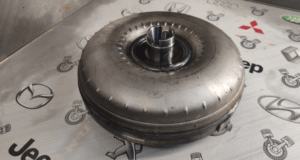
BTI engineers and manufactures a complete line of manual, semi-automatic, and fully automatic precision measurement and testing equipment for torque converters, turbines, dampers, stators, and all related assemblies and components
View More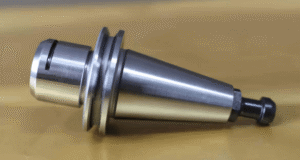
BTI engineers and manufactures both traditional spindled tool holder balancers and a patented (US Patent Numbers 5,763,777 and 5,965,815), first-of-its-kind, spindle-less balancer
View More
BTI engineers and manufactures a complete line of manual, semi-automatic, and fully automatic precision measurement and testing equipment for tire and tire/wheel assemblies for all wheel room applications
View More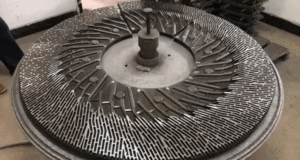
BTI engineers and manufactures a complete line of manual, semi-automatic, and fully automatic precision measurement and testing equipment for refiner plates
View More
BTI engineers and manufactures a complete line of manual, semi-automatic, and fully automatic precision measurement and testing equipment for pumps, fans, impellers, blowers, and related components
View More
BTI engineers and manufactures a complete line of manual, semi-automatic, and fully automatic precision measurement and testing equipment for hard drives, head readers, and related components
View More
BTI engineers and manufactures a complete line of manual, semi-automatic, and fully automatic precision measurement and testing equipment for all flywheels, flex plates, and related assemblies and components
View More
BTI engineers and manufactures a complete line of manual, semi-automatic, and fully automatic precision measurement and testing equipment for flanges, yokes, and related assemblies and components
View More
To contact us regarding your project - or if you have any questions - please click the button below :
Request a QuoteGet Started
Connect with our measurement experts and get the technical guidance your application demands.