Military
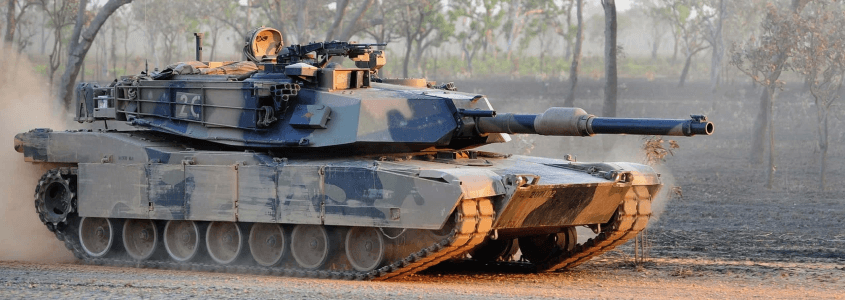
Balance Technology Inc. builds balancing machines and measurement systems for defense and military applications — turbine rotors and blades, rotorcraft drive systems, propellers and propulsors, ground vehicle drivelines, final drives, traction motors and generator rotors. BTI has been designing this equipment in Whitmore Lake, Michigan since 1968.
Defense work splits between new production and sustainment, and the two ask for different machines. A production program is engineered around one part family and integrated into the line. A depot, overhaul or repair facility needs a machine that covers a range of parts across several platforms, often including equipment that has been in service for decades. BTI builds for both, and rebuilds and retrofits existing machines where the mechanical base is still sound.
What BTI Balances in Defense Applications
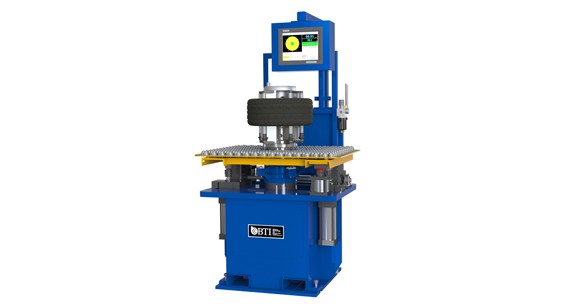
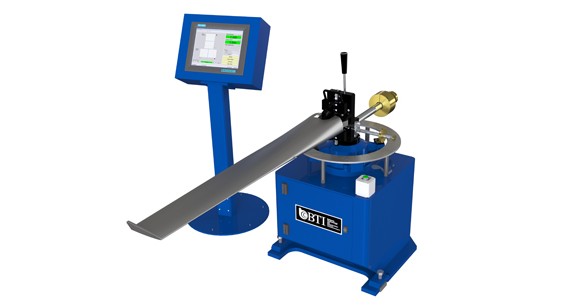
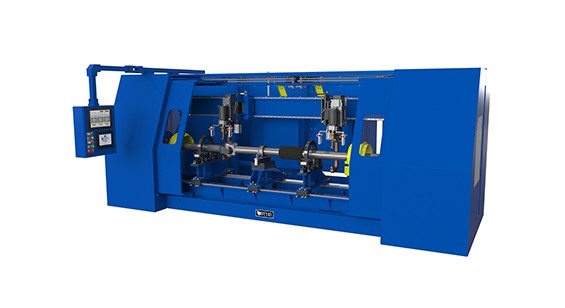
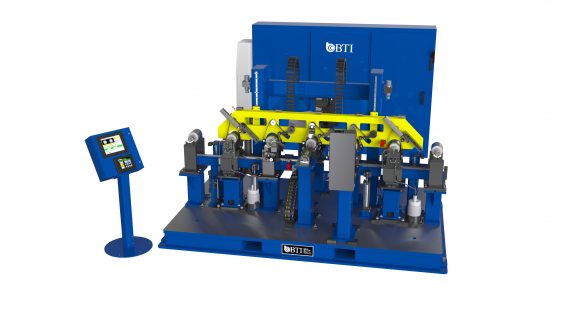
BTI balancing machines are built on four platforms — VNR (vertical non-rotator), H (horizontal cradle), VR (vertical rotator) and P (platform suspension) — plus spinners and test stands. The platform follows the part geometry and how it has to be held; the correction method follows the material and where there is room to add or remove mass.
| Component | Typical platform | Correction method |
|---|---|---|
| Turbine rotors, blades and blisks | H | Grind, mill |
| Rotorcraft drive shafts and tail rotor drive | H | Weight-add, weld-on weight |
| Propellers and propulsors | VR, P | Weight-add |
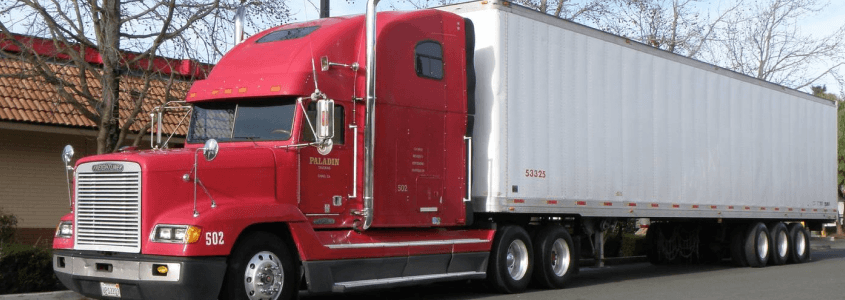
| Ground vehicle driveshafts | H | Weld-on weight |
| Final drives, transmissions and reducers | H, VR | Drill, mill |
| Traction motors and generator rotors | H, VR | Mill, drill, weight-add |
| Pumps, fans and blowers | VNR, P | Drill, weight-add |
| Flywheels and clutch assemblies | VNR | Drill, mill |
How a Machine Gets Sized
A BTI machine designation names a platform and a class. The number is a class, not a part weight limit — it describes the size and load envelope of the base.
Sizing works from the tooling and the part together, not the part alone. Tooling is not specified until the part prints are reviewed and the fixture is concepted, and the heavier the tooling-plus-part assembly is relative to the class, the less repeatable the measurement becomes. A shop that needs one machine to cover a wide range of parts, and does not need tight repeatability, can run a much broader weight range on a given class than a production program can.
Tell BTI the part weight and BTI will name a class the same day. See BTI machine platforms for the full platform and class architecture.
Balance Grade and Tolerance
Defense rotating equipment covers a wide speed range, from slow ground vehicle drivelines to gas turbine rotors. Balance tolerances are set by ISO 21940-11, which superseded ISO 1940-1. The standard assigns a balance quality grade G, and the permissible residual specific unbalance follows from that grade and the service speed:
eper = (G × 60) ÷ (2π × n)
where eper is permissible residual specific unbalance in g·mm/kg, G is the balance quality grade in mm/s, and n is the service speed in rev/min. Permissible residual unbalance is then U = eper × m, divided across the correction planes.
| Grade | Typical components |
|---|---|
| G 16 | Ground vehicle driveshafts and cardan shafts |
| G 6.3 | Fans, flywheels, pump impellers, normal electric armatures |
| G 2.5 | Gas turbine rotors, machine-tool drives, special electric armatures |
| G 1 | Precision spindles and small high-speed rotating assemblies |
Work out a specific tolerance with the ISO balance tolerance calculator.
Sustainment, Depot and Overhaul
Much of the balancing work in defense is sustainment rather than new build. Fielded equipment stays in service far longer than its commercial equivalent, which means overhaul facilities balance parts whose original tooling and original machine may no longer exist. A machine specified for that environment has to hold tolerance across a part mix rather than one part, and has to be supportable for the life of the program.
That shapes the specification: a wider tooling range, controls and software that can be maintained rather than replaced, and documentation written for a depot rather than a production line. Where a facility already has capable mechanical bases, a PC upgrade or retrofit is often a better answer than a new machine.
Program Requirements
Defense programs carry documentation, traceability and compliance requirements that commercial programs do not. BTI addresses these in the machine specification rather than after the fact, and works from the requirements as written into the contract. Where a program has specific compliance obligations, BTI reviews them before quoting.
Correction Methods
| Method | Where it fits |
|---|---|
| Drill | Cast and forged parts with material available to remove |
| Mill | Controlled removal on a defined correction band |
| Grind | Hardened or finished surfaces, including turbine hardware |
| Weld-on weight | Driveshafts and fabricated assemblies, adding rather than removing mass |
| Weight-add | Assemblies where removal is not permitted by the part print |
Standards
BTI certifies machines to ISO 21940, SAE International balancing specifications, and DIN specifications. Where a program carries a measurement system capability requirement, BTI evaluates the part and the process first, then confirms what is achievable and commits to it in the machine specification.
Frequently Asked Questions
Can one balancing machine cover parts from more than one platform?
Yes, within a class. How wide that range can be depends on the tooling and on how much repeatability the application requires. Depot and overhaul facilities routinely run a broad part mix on a single class.
What balance grade does a gas turbine rotor need?
Turbine tolerances are set by the engine program rather than by a universal figure. ISO 21940-11 places most gas turbine rotating assemblies at G 2.5 or tighter, with the specific tolerance following from the service speed and the rotor mass.
Does BTI rebuild or retrofit existing balancing machines?
Yes, including machines built by other manufacturers. See BTI rebuilds and retrofits, competitor rebuilds and retrofits, and PC upgrades for machines still mechanically sound.
What information does BTI need to quote a machine?
The part print, the part weight, the service speed, the balance tolerance if one is specified, and the required production rate. Lead times are quoted in weeks at the time of quotation and move with current backlog.
Can BTI support equipment that is no longer in production?
Often yes. The question is whether the mechanical base is sound and whether the part can be held repeatably. BTI reviews the existing machine and the part prints before recommending rebuild, retrofit or replacement.









Connect with us
To contact us regarding your project - or if you have any questions - please click the button below :
Request a QuoteGet Started
Get in touch with us. We're here to assist you.
Connect with our measurement experts and get the technical guidance your application demands.