
Recreational Vehicles
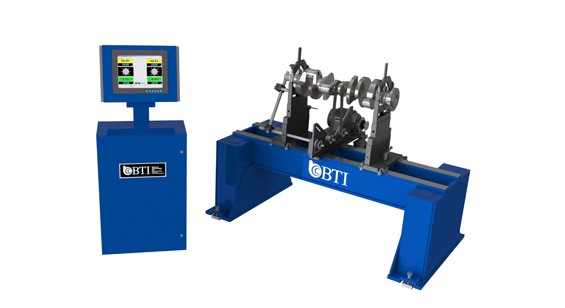
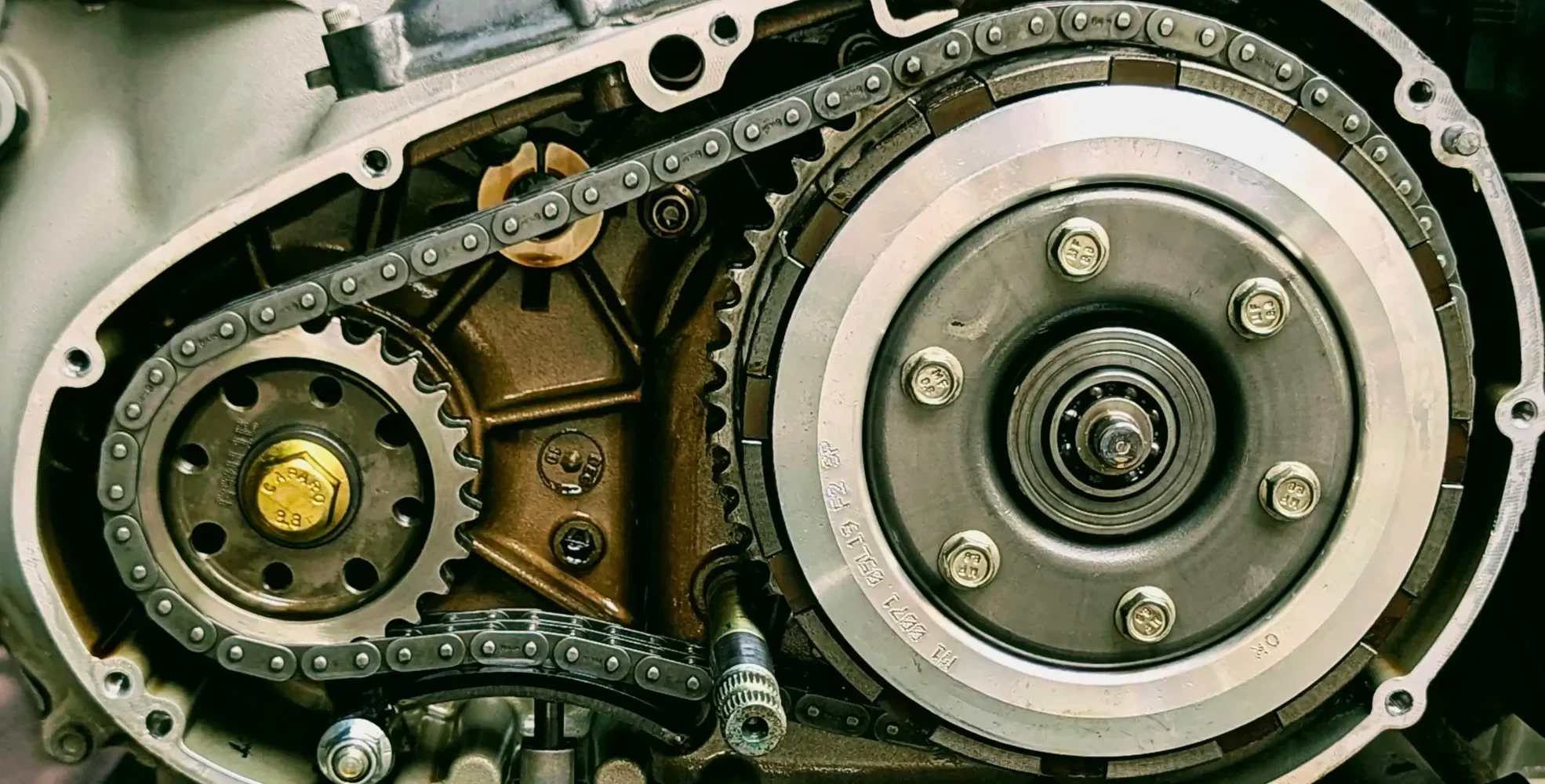
Balance Technology Inc. builds balancing machines and measurement systems for recreational vehicle and powersports manufacturing — crankshafts and driveshafts, flywheels and rotors, clutches and variator components, torque converters, cooling fans, transmission parts and wheel assemblies. BTI has been designing this equipment in Whitmore Lake, Michigan since 1968.
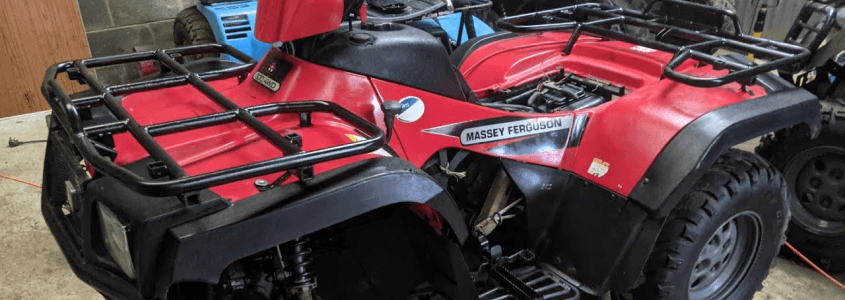
Powersports products put the operator closer to the engine than any passenger vehicle does. On a motorcycle, snowmobile or personal watercraft the rider is in direct contact with the structure, so vibration is felt rather than heard, and it becomes a product quality issue at levels a car would never notice.
What BTI Balances in Recreational Vehicles
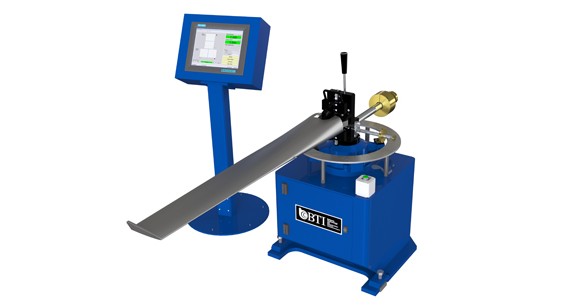
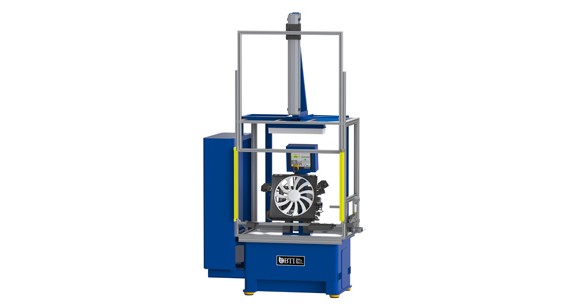
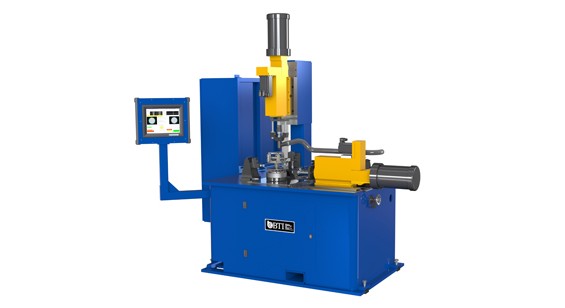
BTI balancing machines are built on four platforms — VNR (vertical non-rotator), H (horizontal cradle), VR (vertical rotator) and P (platform suspension) — plus spinners and test stands. The platform follows the part geometry and how it has to be held; the correction method follows the material and where there is room to add or remove mass.
| Component | Typical platform | Correction method |
|---|---|---|
| Crankshafts | H | Drill, mill |
| Driveshafts and propeller shafts | H | Weld-on weight |
| Flywheels and rotors | VNR | Drill, mill |
| Clutches and variator components | VNR, VR | Drill, weight-add |
| Torque converters | VR | Weld-on weight |
| Transmission components | VR, H | Drill, mill |
| Engine cooling fans and modules | P | Weight-add |
| Wheel and tire assemblies | VR | Clip-on weight |
How a Machine Gets Sized
A BTI machine designation names a platform and a class. The number is a class, not a part weight limit — it describes the size and load envelope of the base.
Sizing works from the tooling and the part together, not the part alone. Tooling is not specified until the part prints are reviewed and the fixture is concepted, and the heavier the tooling-plus-part assembly is relative to the class, the less repeatable the measurement becomes. A shop that needs one machine to cover a wide range of parts, and does not need tight repeatability, can run a much broader weight range on a given class than a production program can.
Tell BTI the part weight and BTI will name a class the same day. See BTI machine platforms for the full platform and class architecture.
Balance Grade and Tolerance
Powersports engines run at higher service speeds than most automotive equivalents, which pulls several components toward the tighter grades. Balance tolerances are set by ISO 21940-11, which superseded ISO 1940-1. The standard assigns a balance quality grade G, and the permissible residual specific unbalance follows from that grade and the service speed:
eper = (G × 60) ÷ (2π × n)
where eper is permissible residual specific unbalance in g·mm/kg, G is the balance quality grade in mm/s, and n is the service speed in rev/min. Permissible residual unbalance is then U = eper × m, divided across the correction planes.
| Grade | Typical components |
|---|---|
| G 40 | Wheels, wheel rims and wheel sets |
| G 16 | Driveshafts and cardan shafts with special requirements |
| G 6.3 | Fans, flywheels, pump impellers, normal electric armatures |
| G 2.5 | High-speed drives and special electric armatures |
Work out a specific tolerance with the ISO balance tolerance calculator.
Single and Twin-Cylinder Crankshafts
Powersports engines are often single or twin-cylinder, and those crankshafts raise a question that multi-cylinder engines mostly answer for themselves. In a reciprocating engine the reciprocating mass cannot be fully balanced by a rotating counterweight — correcting it in one axis creates unbalance in another. Engine designers resolve this with a balance factor, the proportion of reciprocating mass counterbalanced at the crank.
That factor is an engine design decision, not a machine setting, and it comes from the engine program. What the balancing machine has to do is hold the resulting tolerance repeatably, with tooling that locates the crankshaft the same way every time. BTI concepts the fixture from the part print so the holding method and correction access are settled together.
Correction Methods
| Method | Where it fits |
|---|---|
| Drill | Cast and forged parts with material available to remove |
| Mill | Controlled removal on a defined correction band |
| Weld-on weight | Driveshafts and torque converters |
| Clip-on or press-on weight | Wheel and tire assemblies |
| Weight-add | Assemblies and plastics where removal is not permitted |
Standards
BTI certifies machines to ISO 21940, SAE International balancing specifications, and DIN specifications. Where a program carries a measurement system capability requirement, BTI evaluates the part and the process first, then confirms what is achievable and commits to it in the machine specification.
Frequently Asked Questions
Does BTI set the balance factor for a single-cylinder crankshaft?
No. The balance factor is an engine design decision that comes from the engine program. BTI builds the machine and tooling that hold the resulting tolerance repeatably.
Why does balancing matter more on powersports than on cars?
The operator is in direct contact with the structure rather than isolated from it by a body and suspension, and powersports engines generally run at higher service speeds. Both raise the level at which residual unbalance becomes noticeable.
Does BTI rebuild or retrofit existing balancing machines?
Yes, including machines built by other manufacturers. See BTI rebuilds and retrofits, competitor rebuilds and retrofits, and PC upgrades for machines still mechanically sound.
What information does BTI need to quote a machine?
The part print, the part weight, the service speed, the balance tolerance if one is specified, and the required production rate. Lead times are quoted in weeks at the time of quotation and move with current backlog.









Connect with us
To contact us regarding your project - or if you have any questions - please click the button below :
Request a QuoteGet Started
Get in touch with us. We're here to assist you.
Connect with our measurement experts and get the technical guidance your application demands.