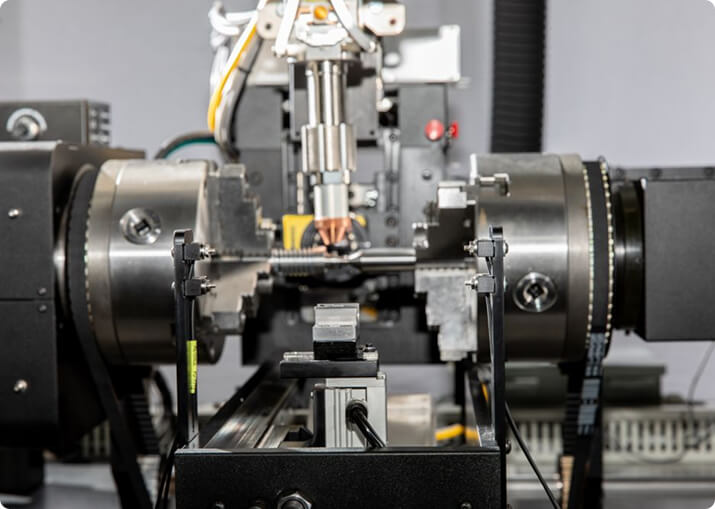

Electric Vehicle
BTI engineers and manufactures a complete line of manual, semi-automatic, and fully automatic precision measurement and testing equipment for all eDrive
View More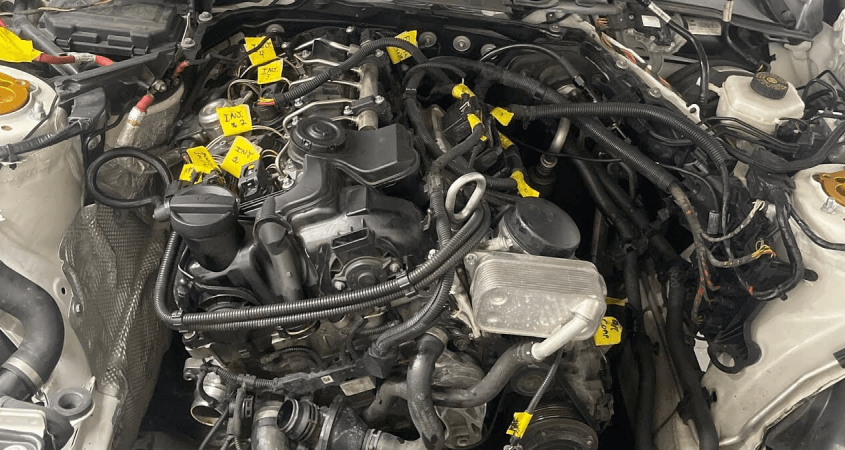
An engine contains a dozen rotating parts that are not the crankshaft, and each one has its own balance problem. Harmonic dampers, camshafts, water pump and oil pump rotors, pulleys, fan hubs and accessory drive components all turn at different speeds, carry different masses and offer different correction access.
Balance Technology Inc. builds balancing, gauging and crack detection equipment for engine components across that range, for original equipment production and for remanufacturing.
A torsional vibration damper is an inertia ring bonded to a hub through an elastomer, and the bond is the complication. The ring can sit slightly eccentric to the hub, the elastomer thickness can vary around the circumference, and the assembly’s balance condition depends on the bonding operation as much as on the machining of either piece.
That means the damper has to be balanced as an assembly, after bonding. It also means a damper with a degraded or migrated elastomer — common on high-mileage engines arriving for remanufacture — may not give a repeatable reading at all, because the two masses can move relative to one another during the spin.
Where the engine is externally balanced, the damper also carries a deliberate counterweight and its target is a specified unbalance rather than zero. Measuring it against a zero target will reject a correct part.
A camshaft is a slender rotor whose lobes are eccentric by design. That asymmetry is the whole point of the part, and it cannot be corrected away — what matters is the variation from the intended condition, not the departure from symmetry.
Camshafts run at half crankshaft speed, which relaxes the permissible unbalance relative to a crank of similar mass. Their length-to-diameter ratio makes them two-plane parts, and the longer ones are worth checking against their bending critical speed before a rigid-rotor tolerance is applied.
Water pump impellers and oil pump rotors are small, run at or near engine speed, and are frequently cast or sintered — which puts the unbalance in the raw material rather than the machining. Correction access is usually limited to a hub or a designed boss, since vane and gear geometry is functional.
Pulleys and fan hubs are disc-like single-plane parts in most cases. Multi-groove pulleys with appreciable axial width are worth checking for a couple rather than assuming one is absent.
Connecting rods and pistons are weight-matched, not balanced. The operation controls the mass of each piece — and for rods, the mass at each end separately — so that the reciprocating assembly is consistent cylinder to cylinder. It feeds the bobweight calculation used to balance the crankshaft.
The two operations are frequently confused because they happen in the same department and serve the same goal. They use different equipment and different acceptance criteria.
Each component gets its own tolerance from ISO 21940-11, based on a balance quality grade, that component’s mass and the speed it actually runs at — not the engine’s speed. A camshaft at half engine speed and a damper at full engine speed do not share a number. BTI publishes a free ISO 21940-11 balance tolerance calculator with the method behind it — grade selection, the permissible unbalance formula, plane allocation, and a worked example.
Engine component lines commonly combine balancing with:
Layouts range from single manual stations for remanufacturing and low-volume work through to fully automatic cells with correction and data collection, and vary to accommodate any production rate. For platform selection across the full range, see BTI balancing machines.
Related applications include crankshafts, flywheels and flex plates and engine cooling modules.
What engine components other than the crankshaft are balanced?
Camshafts, harmonic dampers, pulleys, water pump impellers, oil pump rotors, connecting rods and pistons. Rods and pistons are weight matched rather than balanced in the rotating sense, but the purpose is the same — to remove asymmetry from the assembly.
Why are connecting rods and pistons weight matched instead of balanced?
Because they reciprocate rather than rotate. There is no axis to balance them about. What matters is that each rod and piston assembly weighs the same as the others, so the forces they produce cancel between cylinders. Rods are matched both overall and end for end.
Is a harmonic damper balanced with the crankshaft?
It depends on the engine. An externally balanced engine has a damper with a deliberate counterweight that works with the crankshaft’s residual unbalance, so the two are a matched pair. An internally balanced engine takes a neutral damper. Fitting the wrong one causes severe vibration.
Do camshafts need balancing?
Production camshafts frequently do not, because they turn at half engine speed and their lobes are arranged to distribute mass reasonably. High-speed and racing applications are a different matter, and camshafts for those are balanced conventionally.
What tolerance applies to engine accessories like pulleys?
It follows from the balance quality grade and maximum engine speed. Accessory pulleys typically sit in a moderate grade band, but they turn faster than the crankshaft because of their drive ratio, and that higher speed tightens the permissible residual unbalance.
Equipment layouts vary to accommodate any production rate. Typical correction methods for balancing vary greatly by product type, and include drilling, milling, grinding, piercing, and spot and projection welding.
Additionally, BTI’s unique ability to combine the aforementioned technologies into one fully integrated system enables our clients to reduce capital expenditures, increase product quality, and minimize floor space requirements.
Let our staff of more than 50 engineers design a configured-to-order solution for your specific requirements. Furthermore, our commercial Measurement & Testing Services Group (M&T Services) can assist with everything from prototype testing and R&D work to master certification and running small-to-medium production runs.
If you don’t see the product you are looking for, or have specific questions, please contact us.
BTI engineers and manufactures a complete line of manual, semi-automatic, and fully automatic precision measurement and testing equipment for all eDrive
View More
BTI engineers and manufactures a complete line of manual, semi-automatic, and fully automatic precision measurement and testing equipment for all turbo charger components and complete assemblies
View More
BTI engineers and manufactures a complete line of manual, semi-automatic, and fully automatic precision measurement and testing equipment for turbines, jet engines, blades, propellers, steam turbines, and other related assemblies and components weighing fractions of an ounce to 200,000 pounds
View More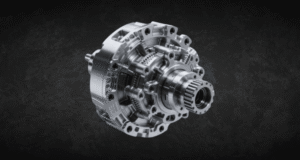
BTI engineers and manufactures a complete line of manual, semi-automatic, and fully automatic precision measurement and testing equipment for all types of transmission components
View More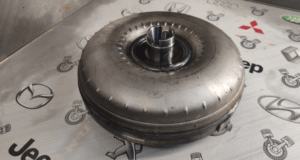
BTI engineers and manufactures a complete line of manual, semi-automatic, and fully automatic precision measurement and testing equipment for torque converters, turbines, dampers, stators, and all related assemblies and components
View More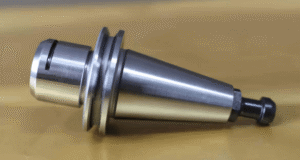
BTI engineers and manufactures both traditional spindled tool holder balancers and a patented (US Patent Numbers 5,763,777 and 5,965,815), first-of-its-kind, spindle-less balancer
View More
BTI engineers and manufactures a complete line of manual, semi-automatic, and fully automatic precision measurement and testing equipment for tire and tire/wheel assemblies for all wheel room applications
View More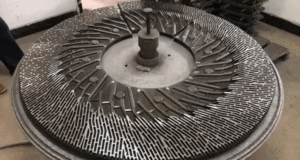
BTI engineers and manufactures a complete line of manual, semi-automatic, and fully automatic precision measurement and testing equipment for refiner plates
View More
BTI engineers and manufactures a complete line of manual, semi-automatic, and fully automatic precision measurement and testing equipment for pumps, fans, impellers, blowers, and related components
View More
BTI engineers and manufactures a complete line of manual, semi-automatic, and fully automatic precision measurement and testing equipment for all HVAC assemblies and related components
View More
BTI engineers and manufactures a complete line of manual, semi-automatic, and fully automatic precision measurement and testing equipment for hard drives, head readers, and related components
View More
BTI engineers and manufactures a complete line of manual, semi-automatic, and fully automatic precision measurement and testing equipment for all flywheels, flex plates, and related assemblies and components
View More
To contact us regarding your project - or if you have any questions - please click the button below :
Request a QuoteGet Started
Connect with our measurement experts and get the technical guidance your application demands.